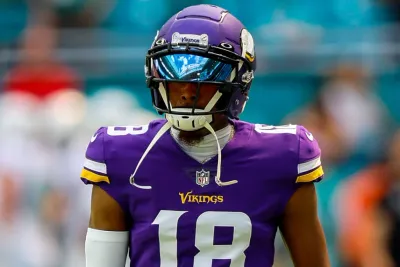
Under Armour Football Visor Review: Best Mid-Range Option

Under Armour Football Visor
- Material
- Polycarbonate
- Tint Options
- Clear, smoke, multiflection
- UV Protection
- 100% UVA/UVB
- Anti-Fog
- Yes (coating)
- Helmet Compatibility
- Universal clip system
- Price Range
- $40–60
The Under Armour football visor is a solid mid-range option that fits most helmets and includes anti-fog coating. It doesn't match Oakley's PRIZM optics or Nike's ventilation, but at $40–60 it offers good value for high school and recreational players who want reliable eye protection without the premium price.
- Universal fit works with most major helmet brands
- Anti-fog coating included on all models
- Mid-range pricing ($40–60) undercuts Oakley significantly
The football visor market has a clear gap in the middle. At the top, the Oakley Football Shield commands $50–70 with Prizm optics and Plutonite durability. At the bottom, budget options like EliteTek cover basic protection for $15–25. The Under Armour football visor occupies the space between — a $40–60 polycarbonate shield with anti-fog coating, universal helmet compatibility, and optical quality that exceeds budget visors without reaching Oakley's level.
For high school players, recreational leagues, and anyone who wants a reliable visor without the premium price tag, Under Armour delivers a balanced package. It does everything adequately and nothing exceptionally, which is exactly the value proposition for a mid-range product.
Construction and Materials
Polycarbonate Lens
The Under Armour visor uses standard optical-grade polycarbonate — the same base material found in virtually every football visor on the market. Polycarbonate is inherently impact-resistant, lightweight, and capable of blocking UV radiation. It meets NOCSAE impact standards, meaning it can absorb the forces generated during normal football contact without shattering or cracking.
Where Under Armour's polycarbonate differs from Oakley's Plutonite is in the refinement. Plutonite is a proprietary formulation that achieves better scratch resistance, thinner profiles, and superior optical clarity at the edges. The Under Armour lens is slightly thicker and shows minimal optical distortion in the peripheral zones — not enough to affect gameplay, but noticeable if you compare them side by side on a bench.
The lens thickness is approximately 2.2mm across the optical zone, which provides adequate rigidity without adding significant weight to the helmet. A finger jamming through the facemask will deflect off this visor the same way it would off an Oakley or Nike shield. At the protection level, there is no meaningful difference between the brands.
UV Protection
Under Armour rates the visor at 100% UVA/UVB protection, which is standard across the category. This means it blocks ultraviolet wavelengths below 380nm — the radiation that causes long-term eye damage during extended outdoor exposure.
One area where Under Armour falls behind the Oakley is blue light filtering. Oakley's Plutonite blocks harmful blue light up to 400nm, covering the gap between 380nm and 400nm that standard polycarbonate lets through. For players who practice outdoors for several hours daily, that additional blue light protection has cumulative value. For Saturday-only game players, the difference is negligible.
Build Quality
The overall construction feels solid. The visor edges are cleanly finished without sharp spots or manufacturing artifacts. The clip attachment points are reinforced, and the visor maintains its shape when flexed moderately. It is not as rigid as the Oakley shield — you can flex the Under Armour visor slightly more with hand pressure — but in normal use, mounted to a helmet, there is no practical difference in rigidity.
Anti-Fog Performance
Under Armour applies an anti-fog coating to the interior surface of all visor models. The coating works by reducing the surface tension of water vapor, causing moisture to spread into a thin, transparent film instead of condensing into visibility-blocking droplets.
How It Performs in Practice
In moderate conditions — temperatures between 40°F and 75°F, moderate humidity — the anti-fog coating works well. During normal gameplay, where you are alternating between high-exertion plays and sideline standing, the visor stays clear. The coating handles the temperature differential between your body heat and ambient air without issue for the first season of use.
Where the coating struggles is in extreme conditions. Below 35°F, heavy breathing between plays generates enough moisture to overwhelm the coating, especially during the second half of games when the coating has already absorbed some moisture. In these conditions, the Nike Gridiron Eye Shield with its ventilation-hole approach outperforms chemical coatings consistently.
Coating Longevity
The factory coating lasts approximately one to two full seasons with proper care. "Proper care" means never wiping the interior surface with your glove, jersey, or towel — all of which contain abrasive fibers that strip the coating. If you must clear moisture mid-game, tilt your head forward and let gravity pull the droplets down, or lift the visor briefly to let air circulate.
After the coating degrades, you have two options: replace the visor ($40–60) or apply aftermarket anti-fog spray. Sprays like C-Clear or Fog Tech DX cost $8–12 and restore anti-fog performance for 4–8 weeks per application. Neither option matches a fresh factory coating, but both extend the visor's useful life.
By comparison, the Nike Gridiron's ventilation-hole anti-fog system never degrades because it is a physical feature, not a chemical one. If fogging is your primary concern, the Nike's approach is more durable long-term.
Optical Clarity
The Under Armour visor provides clean, functional optical clarity through the center 70% of the lens. Colors are accurate, lines are sharp, and there is no noticeable color shift or tinting in the clear version. For tracking a ball in flight, reading a quarterback's eyes, or scanning defensive alignments, the optics are adequate at every competitive level.
Where It Falls Short
Compared to Oakley's Prizm technology, the Under Armour lens transmits light without enhancement. Prizm selectively filters specific wavelengths to increase contrast — green grass appears greener, white lines appear brighter, and jersey colors separate more distinctly from the field background. This contrast enhancement is most noticeable in flat, overcast lighting conditions where everything tends to look washed out.
The Under Armour visor does not filter selectively. It transmits all visible wavelengths evenly (in the clear model), which produces accurate but unenhanced vision. Most players at the high school level will not notice this difference during gameplay. Players at the college and professional level, where split-second reads depend on visual processing speed, may find the Prizm advantage meaningful.
At the peripheral edges of the lens, the Under Armour shows slightly more distortion than both the Oakley and Nike. It is a subtle effect — objects at the far edges of your vision appear very slightly curved. During active play, your eyes focus through the center of the visor, so this edge distortion rarely affects performance. It becomes noticeable only when you deliberately look through the extreme edges.
Universal Fit System
The clip-based mounting system is one of the Under Armour visor's strengths. The included clips are designed to attach to the top bar of most modern facemasks without tools beyond a small screwdriver.
Compatible Helmets
The universal clips fit:
- Riddell SpeedFlex, Speed, Revolution
- Schutt F7, Vengeance, A11
- Xenith Shadow, X2, Epic
- Vicis Zero2
- Most other NOCSAE-certified helmets manufactured after 2015
Installation is straightforward: align the visor with the facemask, position the clips over the top bar, and tighten the screws. The process takes 3–5 minutes.
Fit Issues
On older helmet models (pre-2015), the clip positioning can be problematic. Facemask bar spacing and thickness have changed over the years, and the Under Armour clips are optimized for current-generation helmets. If your clips don't seat firmly or the visor wobbles after installation, the clips may not be compatible with your facemask configuration.
The Oakley Football Shield uses a proprietary twist-on snap system that feels more secure on compatible helmets but fits fewer models overall. The Nike Gridiron uses a similar universal clip approach to Under Armour with comparable compatibility. If you wear a Riddell SpeedFlex specifically, the Oakley mounting system provides the tightest, most rattle-free fit. For everything else, the universal clip systems from Under Armour and Nike are more versatile.
Tint Options and Game Legality
Under Armour offers the visor in three tints:
Clear — 90%+ visible light transmission (VLT). Game-legal at all levels: NFL, NCAA, NFHS, and youth. This is the only version you can wear during competition.
Smoke — Reduces light transmission to approximately 40–50% VLT. Cuts glare during bright outdoor practices. Practice-only at every competitive level.
Multiflection (Mirror) — A reflective coating over a tinted base that creates a mirrored exterior appearance. Looks distinctive but reduces VLT significantly. Strictly practice and recreational use only.
The multiflection version is popular with players who want a visually striking look during practice or seven-on-seven tournaments, but it has no functional advantage over the smoke tint for glare reduction. The mirror coating also scratches more easily than the base lens because it is an applied surface treatment.
For a comprehensive breakdown of which tints are legal at every level of play, see our football visor tint rules guide.
Under Armour vs. Oakley vs. Nike
| Feature | Under Armour | Oakley Prizm | Nike Gridiron |
|---|---|---|---|
| Price | $40–60 | $50–70 | $35–55 |
| Lens technology | Standard poly | Plutonite + Prizm | Max Optics |
| UV protection | 100% UVA/UVB | 100% UVA/UVB/UVC + blue light | 100% UVA/UVB |
| Anti-fog | Chemical coating | Chemical coating | Ventilation holes |
| Scratch resistance | Coating (good) | Plutonite (best) | Coating (good) |
| Mounting | Universal clips | Twist-on snaps | Universal clips |
| Best for | Mid-range value | Premium optics | Anti-fog priority |
The Under Armour does not win any single category in this comparison. It does, however, avoid the weaknesses of each competitor. It is cheaper than Oakley, has better optics than EliteTek, and includes anti-fog coating that Nike forgoes in favor of ventilation holes. For players who want a balanced visor without a standout flaw, it fills the gap.
Who Should Buy the Under Armour Visor
Buy the Under Armour if:
- You want better quality than budget visors but cannot justify Oakley's premium
- You play at the high school or recreational level where Prizm contrast enhancement is not critical
- You need universal helmet compatibility without worrying about proprietary mounting systems
- You prefer a single visor that does everything adequately rather than excelling in one area
Skip the Under Armour if:
- You want the best optics available — the Oakley Football Shield is worth the upgrade
- Fogging is your primary problem — the Nike Gridiron with ventilation holes is the better solution
- Budget is your only concern — EliteTek covers basic protection at half the price
- You want a visor that lasts multiple seasons without replacement — Oakley's Plutonite outlasts Under Armour's polycarbonate
Visor Care Tips
The Under Armour visor requires the same care as any coated polycarbonate visor:
- Clean with a microfiber cloth only — Jersey fabric, paper towels, and gloves scratch the lens and strip the anti-fog coating
- Never touch the interior surface — Fingerprint oils degrade the anti-fog treatment
- Rinse with water after each use — Sweat residue left on the lens accelerates coating breakdown
- Store lens-side up in your helmet bag — Never place the visor face-down on any surface
- Avoid household glass cleaners — Ammonia-based products (Windex, etc.) damage polycarbonate and anti-fog coatings. Use water or a dedicated lens cleaner
- Remove from helmet for storage — Leaving the visor mounted in a hot car or equipment bag can warp the lens over time
Final Verdict
The Under Armour football visor earns a 3.5-star rating as the best mid-range option in the football visor market. It provides reliable eye protection, universal helmet fit, and adequate optical clarity at a price point that makes sense for high school and recreational players. The anti-fog coating works for most conditions, the polycarbonate handles impacts well, and the clear version is game-legal at every level.
It is not the best visor available — that title belongs to the Oakley Football Shield for optics and the Nike Gridiron for fog resistance. But for players who want a quality visor without paying Oakley prices, Under Armour delivers solid performance across the board.
For a full comparison of all major football visors with installation tips and tint rules, check our best football visors buyer's guide.
Pros
- + Universal fit works with most major helmet brands
- + Anti-fog coating included on all models
- + Mid-range pricing ($40–60) undercuts Oakley significantly
- + Clear version is game-legal at all levels
- + Polycarbonate construction handles impacts well
Cons
- - Optics are standard — no PRIZM-level contrast enhancement
- - Anti-fog coating degrades over 1–2 seasons
- - Smoke and multiflection tints are practice-only (NFHS/NCAA rules)
- - Clip system can be finicky on older helmet models
- - No ventilation channels like the Nike Gridiron