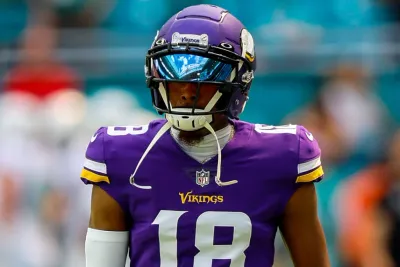
Oakley Football Visor Review (Prizm Shield 2026)

Oakley Football Shield (Prizm)
- Lens
- Plutonite polycarbonate (Prizm)
- UV Protection
- 100% UVA/UVB/UVC + blue light to 400nm
- Anti-Fog
- Yes
- Scratch Resistant
- Yes
- Mounting
- Twist-on precision snaps
- Compatible Helmets
- Riddell Speedflex, Schutt, Vicis, Xenith
- Tint Options
- Prizm Clear (75% VLT), Black, Grey, Sapphire
Nike Gridiron Eye Shield
- Lens
- Polycarbonate
- UV Protection
- 100% UVA/UVB
- Technology
- Max Optics (distortion-free)
- Anti-Fog
- Ventilation holes
- Mounting
- Universal clips
- Compatible Helmets
- Riddell, most major brands
The Oakley Football Shield is the best visor for players who want top-tier optics and scratch resistance. Prizm lens technology enhances field contrast, Plutonite blocks 100% UV, and the tool-free mounting snaps onto most helmets. Just remember: tinted models are practice-only unless you have a medical exemption.
- Prizm lens technology enhances contrast and field detail
- Plutonite blocks 100% UV + harmful blue light to 400nm
- Scratch-resistant and anti-fog coated
Football visors protect your eyes from three things that happen on every play: fingers reaching through the facemask, dirt and debris kicked up by linemen, and sun glare that kills your vision on a deep route or a high punt. A good visor does all of this without affecting your field of vision. A bad one fogs up, scratches on the first hit, and distorts everything you're trying to see.
The Oakley Football Shield with Prizm lens technology is the premium option in football eye protection. It uses the same Plutonite polycarbonate and Prizm optics that Oakley puts in their $200 sport sunglasses — except it's molded to fit inside a football helmet. At $50–70, it costs more than budget alternatives, but the optical quality and durability justify the difference.
What Makes the Oakley Shield Different
Plutonite Lens Material
Oakley's Plutonite is not standard polycarbonate. It's a proprietary formulation that blocks 100% of UVA, UVB, and UVC rays plus harmful blue light up to 400nm. Most competitors block UVA/UVB but let blue light through. For players who spend hours practicing in direct sun, the blue light filtration adds meaningful eye protection beyond basic UV blocking.
Plutonite is also inherently impact-resistant without the thickness that cheaper polycarbonate needs to achieve the same protection. The result is a thinner, lighter visor with better optical clarity — less weight on your helmet and less distortion in your peripheral vision.
Prizm Technology
This is where Oakley separates from every other football visor manufacturer. Prizm selectively filters specific light wavelengths to enhance contrast and color separation. On the football field, this means:
- Sharper field detail — yard lines, hash marks, and boundary lines are more distinct, even in bright sun
- Better player tracking — contrasting jersey colors pop more against the green/brown field
- Improved depth perception — balls in flight stand out more clearly against sky backgrounds
The Prizm Clear version allows 75% light transmission, which is bright enough for game use while still enhancing contrast. The Prizm Black, Grey, and Sapphire tints reduce more light but are practice-only (see tint rules below).
Scratch Resistance
Football visors take abuse. Fingers, facemask bars, chin straps, and turf debris all contact the lens surface during normal play. Plutonite's scratch resistance significantly outperforms standard polycarbonate — after a full season of practice and games, an Oakley shield maintains clarity that budget visors lose within weeks.
That said, no visor is scratch-proof. Hard impacts from metal facemask hardware or cleats will eventually mark any lens. Treat the surface with care between uses.
Anti-Fog Performance
The Oakley shield includes anti-fog coating that handles temperature differentials between your body heat and cold game-day air. It's effective for normal game conditions — breathing hard during plays, cold November games, humid preseason practices.
The coating works best when you don't touch the inside surface. Wiping the interior with a jersey degrades the anti-fog treatment over time. If you need to clean the inside, use the included microfiber cloth or let moisture evaporate naturally.
Mounting System
The Oakley shield uses a tool-free twist-on system with precision snaps. Installation takes under a minute. It's optimized for Riddell Speedflex helmets (the most common helmet in college and professional football) and also fits Schutt, Vicis, and Xenith models, though fit quality varies.
Check your specific helmet model's visor compatibility before purchasing. Some older helmets may need adapter clips that are sold separately.
Tint Rules: What's Legal at Each Level
This is the most important thing to know before buying a tinted visor:
NFL: Clear visors only. Tinted and darkened visors are prohibited without medical exemption. Medical exemptions are rare and require documented eye conditions.
NCAA (College): Clear, molded-material visors only. No tint. Medical exemptions available but require NCAA approval.
High School: Clear visors only. Officials must be able to see the player's eyes through the visor for concussion assessment. Medical exemptions are possible with a doctor's note, but the referee has final discretion.
Bottom line: If you play in games at any competitive level, buy the Prizm Clear version. Tinted Prizm Black, Grey, and Sapphire are for practice only.
Oakley vs. Nike Gridiron Eye Shield
The Nike Gridiron Eye Shield is Oakley's closest competitor in the premium visor market. Here's how they compare:
Optics: Oakley's Prizm technology enhances contrast and color — Nike's Max Optics provides distortion-free vision but doesn't enhance contrast. Oakley also blocks blue light to 400nm while Nike covers UVA/UVB. Advantage: Oakley.
Anti-fog: Nike uses physical ventilation holes at the central mounting tab to prevent fogging. Oakley relies on chemical anti-fog coating. Both work — Nike's approach is more durable (ventilation holes don't degrade), while Oakley's provides a cleaner surface. Slight advantage: Nike.
Mounting: Both use tool-free clip systems compatible with most major helmets. The Oakley twist-on system feels more secure, but Nike's universal clips fit a wider range of facemask configurations. Draw.
Price: Both sit in the $50–70 range. Draw.
Extras: Nike includes a multicolor decal pack for customization. Oakley doesn't. Minor advantage: Nike.
Verdict: Oakley wins on optical quality. If you want the best vision enhancement and UV/blue light protection, the Oakley Prizm is the better visor. If you prioritize ventilation-based anti-fog and want more mounting flexibility, the Nike Gridiron is a solid alternative at the same price.
Budget Alternative: EliteTek Football Visor
For players who want eye protection without the Oakley premium, the EliteTek Football Visor ($20–50) is the best budget option. It uses 3mm optical polycarbonate with anti-fog and anti-scratch coatings, fits most helmets via a universal 2-clip system, and comes in clear, mirror (15% tint), and smoked (30% tint) options.
You're not getting Prizm-level optics or Plutonite durability, but for youth and high school players who go through visors quickly, EliteTek delivers functional protection at a fraction of the premium price.
Visor Care Tips
- Clean with microfiber only — never use paper towels, jersey fabric, or household glass cleaner
- Don't touch the inside surface — this is where the anti-fog coating lives
- Store with the lens facing up — placing it face-down on any surface risks scratches
- Remove before storing helmet — leaving a visor attached in a hot equipment bag warps the lens over time
- Replace when scratched — a scratched visor distorts vision. At $50–70 for Oakley or $20–50 for EliteTek, replacement is affordable
Final Verdict
The Oakley Football Shield with Prizm is the best football visor available. Prizm lens technology, full-spectrum UV and blue light protection, scratch-resistant Plutonite, and a tool-free mounting system make it the clear choice for any player who wants premium eye protection.
For game use, buy the Prizm Clear model. For practice, the tinted options (Prizm Black, Grey, Sapphire) reduce glare and look sharp, but they're not legal in competitive games without medical exemption.
If budget is the primary concern, the EliteTek visor at $20–50 gets the job done for youth and high school players who need basic protection and UV blocking. Oakley's focus on impact-rated polycarbonate extends beyond the football field — the same material principles show up in basketball face masks, where shatterproof polycarbonate protects players recovering from facial injuries on the court. If you are interested in how visors compare across sports, check out our guide on hockey face shield vs. hockey visor for a look at similar protective eyewear in hockey.
Pros
- + Prizm lens technology enhances contrast and field detail
- + Plutonite blocks 100% UV + harmful blue light to 400nm
- + Scratch-resistant and anti-fog coated
- + Tool-free twist-on mounting system
- + Multiple Prizm tint options (Clear, Black, Grey, Sapphire)
Cons
- - Tinted models not legal in games without medical exemption
- - Premium price ($50–70) vs budget options
- - Optimized for Riddell Speedflex — fit varies on other helmets