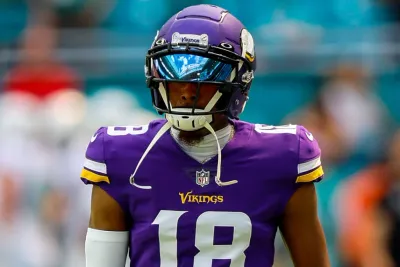
Football Visor Tint Rules: What's Legal in 2026?

The most common question football players ask about visors has nothing to do with optics, anti-fog coatings, or helmet compatibility. It is this: can I wear a tinted visor in my game?
The short answer is no — not without a medical exemption. Every major governing body in American football, from the NFL down to Pop Warner youth leagues, requires visors to be 100% clear during competition. The rules exist for player safety, and they are enforced strictly.
This guide breaks down the specific regulations at every level of play, explains what "clear" actually means in technical terms, details the medical exemption process, and helps you understand which visors you can wear for games versus practice.
Why the Rules Exist
The clear-visor requirement stems from a single concern: medical staff and officials need to see a player's eyes after a hit.
When a player takes a significant blow to the head, athletic trainers and team physicians assess for concussion by checking several visual indicators — pupil dilation, eye tracking, gaze stability, and responsiveness. A tinted or mirrored visor blocks this visual assessment, forcing medical staff to remove the visor (which takes time) or work around it (which reduces accuracy). In situations where rapid concussion assessment can prevent a second impact that causes catastrophic brain injury, every second matters.
Officials also use eye visibility for safety enforcement. Referees check whether a downed player is conscious and responsive before allowing play to continue. A dark visor makes this assessment impossible from a standing position.
The rule is not about aesthetics or competitive advantage. It is a medical protocol designed to protect players from the consequences of undetected head injuries.
NFL Visor Rules
The NFL adopted its clear-visor policy in 1998, driven by the league's increasing focus on head injury management. The rule is codified in the NFL's Uniform and Equipment Rules.
What the Rule Says
All eye shields must be clear and made of a material approved by the NFL. The visor must allow training staff, officials, and medical personnel to see the player's eyes at all times during the game. No tint, no color, no mirror coating.
Enforcement
Equipment managers inspect visors before each game. Any visor that does not meet the clear standard is flagged, and the player must remove or replace it before taking the field. Wearing a non-compliant visor during play results in an unsportsmanlike conduct penalty and potential fines.
Medical Exemptions in the NFL
The NFL grants medical exemptions for tinted visors under specific conditions:
- The player must have a documented medical condition that requires light reduction — typically photophobia (extreme light sensitivity), migraines triggered by bright light, or protection of a healing eye injury.
- A team physician must submit documentation to the NFL league office describing the condition and explaining why a tinted visor is medically necessary.
- The league office must approve the exemption before the player can use a tinted visor in games.
Exemptions are not common. The NFL grants them on a case-by-case basis, and the documentation requirements are strict. Players with approved exemptions typically use lightly tinted visors (50–70% VLT) rather than fully dark shields, as the goal is to reduce light transmission to a medically appropriate level while maintaining some eye visibility for staff.
Notable NFL players who have received tinted visor exemptions include those recovering from significant eye injuries sustained during play. The exemption typically lasts for the duration of the medical condition — once the player's eyes heal or the condition resolves, the exemption expires.
What NFL Players Actually Wear
The majority of NFL players wear Oakley Football Shields with Prizm Clear lenses. Oakley has been the official eyewear partner of the NFL since 2019, and the Prizm Clear visor (75% VLT) is the most common shield on the field. The Prizm Clear lens is technically not 100% transparent — it enhances contrast by selectively filtering certain wavelengths — but it meets the NFL's "clear" standard because it does not reduce overall light transmission below acceptable levels and does not obscure eye visibility.
For a detailed look at the Oakley visor used by NFL players, read our Oakley Football Shield review.
NCAA Visor Rules
The NCAA's visor regulations are outlined in Rule 1-4-5-b of the NCAA Football Rules.
What the Rule Says
Eye shields must be constructed of a clear, molded, rigid material. The shield must be attached to the helmet and must not be tinted, colored, or mirrored. The shield must permit 100% visible light transmission — meaning no reduction in brightness or color alteration that would prevent officials or medical staff from seeing the player's eyes.
Enforcement
Game officials inspect equipment during pregame checks. Coaches are responsible for ensuring their players' equipment complies with NCAA rules. A player wearing a non-compliant visor will be asked to remove it. Refusing to comply results in the player being disqualified from the game.
Medical Exemptions in the NCAA
The process mirrors the NFL:
- The team physician documents the medical condition requiring a tinted visor.
- The documentation is submitted to the conference office for approval.
- The conference grants or denies the exemption before the player can use a tinted visor in competition.
NCAA exemptions follow the same medical criteria as the NFL — photophobia, light-triggered migraines, and protection of eye injuries. The approval process typically takes 1–2 weeks, so players should submit requests well before the season begins.
High School (NFHS) Visor Rules
NFHS Rule 1-5-3c(4) governs visor regulations at the high school level. These rules are the strictest of any level, largely because high school athletic programs have fewer medical resources for concussion assessment.
What the Rule Says
Eye shields attached to the helmet must be constructed of a clear, molded, rigid material. No tint of any kind is permitted. Officials must be able to see the player's eyes clearly through the visor at all times.
State-Level Variations
While NFHS rules set the national baseline, individual state athletic associations can impose additional requirements:
- Some states require specific NOCSAE certification markings on the visor
- Some states require the visor to be a specific brand or model
- Some states require written documentation from the school that the visor meets NFHS standards
Before purchasing a visor for high school games, check your state athletic association's website for any state-specific requirements beyond the NFHS baseline.
Enforcement
High school officials are often more aggressive about visor enforcement than college or professional referees. An official who cannot clearly see a player's eyes through a visor can order the player to remove it immediately, even if the visor is technically clear. Surface scratches, smudges, or haze that reduce transparency can trigger enforcement.
This is another reason to maintain your visor properly and replace it when scratches accumulate. A heavily scratched clear visor can look tinted under stadium lights and draw an official's attention.
Medical Exemptions at the High School Level
High school medical exemptions follow this general process (specifics vary by state):
- A physician provides a written statement explaining the medical need for a tinted visor, including the diagnosis and the recommended tint level.
- The player or family submits the documentation to the school's athletic director.
- The athletic director submits the exemption to the state athletic association for approval.
- The state association approves or denies the request. Some states require annual renewal.
- On game day, the player carries a copy of the approved exemption. The referee has final authority — even with an approved exemption, the referee can inspect the visor and make a ruling.
The process can take several weeks. Start the exemption request early in the preseason to ensure approval before the first game.
Youth Football Visor Rules
Youth football rules vary significantly by organization and region.
Pop Warner
Pop Warner follows NFHS guidelines for equipment. Visors must be clear. Tinted visors are not permitted in games. Medical exemptions follow a process similar to high school — physician documentation submitted to the local league commissioner.
USA Football
USA Football recommends following NFHS equipment standards, including the clear-visor requirement. Individual leagues affiliated with USA Football may have additional rules.
Local and Recreational Leagues
Rules vary widely. Some recreational leagues enforce strict clear-visor rules. Others are more lenient, particularly for flag football and non-contact divisions. Always check with your league commissioner before purchasing a tinted visor for a youth player.
General Guidance for Youth Players
At the youth level, a clear visor is always the safe choice. Even if your specific league does not enforce tint rules, playing with a clear visor builds good habits for higher levels of play where the rules are strict. A clear visor also allows coaches and parents to see the player's face for signs of distress, fatigue, or injury.
What "Clear" Actually Means
Not all "clear" visors are identical. The term "clear" in the context of football visor rules refers to visible light transmission (VLT) — the percentage of ambient light that passes through the visor to the player's eyes.
VLT Ratings
- 90–95% VLT — What most clear football visors provide. Nearly all ambient light passes through. This meets the "clear" standard at every governing body.
- 75–85% VLT — Light enhancement zone. Oakley's Prizm Clear visor sits at approximately 75% VLT. It reduces light transmission slightly while enhancing contrast. This is still classified as "clear" because the reduction is minimal and the visor does not obscure eye visibility.
- 40–60% VLT — Light tint. This is where "smoke" visors fall. The tint is visible, and the player's eyes are partially obscured. Not legal for games without a medical exemption.
- 15–30% VLT — Dark tint. Heavily smoked, mirrored, or colored visors. The player's eyes are not visible. Practice-only at all levels.
The dividing line between "clear" and "tinted" is not precisely defined by a single VLT number. Officials make judgment calls based on whether they can see the player's eyes clearly. A visor at 80% VLT that is clean and unscratched will pass inspection. The same visor at 80% VLT with heavy scratches and haze may not, because the accumulated surface damage reduces effective transparency.
Practice Tint Options
While tinted visors are off-limits for games, they are widely used during outdoor practices for glare reduction. Most visor manufacturers offer multiple tint levels:
Smoke tint (40–50% VLT) — The most common practice tint. Reduces brightness without significant color distortion. Available from Oakley, Nike, Under Armour, and EliteTek. Suitable for most sunny practice conditions.
Mirror/multiflection coatings (20–40% VLT) — A reflective exterior coating over a tinted base. Provides additional glare reduction and a distinctive look. Available from Under Armour and EliteTek. The mirror coating scratches more easily than the base tint.
Colored tints (varies) — Blue, gold, rainbow, and other colored tints. Available primarily from EliteTek and other budget brands. The color affects light transmission differently — blue tints can enhance contrast against green fields, while gold tints warm the color temperature. These effects are subtle compared to Oakley's Prizm technology.
Oakley Prizm tints (varies) — Oakley offers Prizm Black, Grey, and Sapphire in their football shield. These use wavelength-specific filtering for enhanced contrast, not just broad light reduction. They are the highest-quality practice tints available but cost $50–70 per visor.
For players who practice outdoors in bright sun, owning both a clear game visor and a tinted practice visor is common. Budget tinted visors from EliteTek ($15–25) make this a low-cost addition to your equipment bag.
How to Handle Visor Inspections
At the high school and college level, visor inspections happen before games and occasionally during play. Here is how to ensure your visor passes:
- Keep the visor clean and scratch-free. Accumulated scratches reduce transparency and can make a clear visor look tinted under artificial light.
- Ensure the NOCSAE marking is visible. Some officials check for certification markings. If the marking has worn off or been scratched away, the visor may be flagged.
- Carry documentation if you have a medical exemption. Keep a copy in your equipment bag and give a copy to your coach. The referee may ask to see it.
- Replace visors that have yellowed. Polycarbonate naturally yellows with UV exposure over time. A yellowed "clear" visor may not pass an official's visual inspection.
- Do not apply any aftermarket tint film to a clear visor. Aftermarket tint films applied over a clear visor are illegal and will be detected during inspection.
Choosing the Right Visor for Your Level
For Game Use (Any Level)
Buy a clear visor from a reputable manufacturer with confirmed NOCSAE certification. The Oakley Football Shield (Prizm Clear) is the premium choice. The Nike Gridiron Eye Shield (Clear) offers the best anti-fog performance. For budget-conscious players, a clear EliteTek visor with verified NOCSAE certification covers the basics.
For Practice Use
Any tint is acceptable during practice. Choose based on your conditions:
- Bright sun, minimal clouds: Smoke tint (40–50% VLT) or Oakley Prizm Black
- Variable conditions: Light smoke or Oakley Prizm Grey
- Overcast with occasional sun: Oakley Prizm Clear (75% VLT) or standard clear
For Players Needing a Medical Exemption
Start the process early. Consult with your ophthalmologist or optometrist, get the required documentation, and submit it through the proper channels for your league. Allow at least 2–4 weeks for processing. Do not assume you can wear a tinted visor during games without prior approval — officials will flag it.
Final Thoughts
The rules are straightforward: clear for games, any tint for practice. Medical exemptions exist for players with documented conditions, but the approval process is deliberate and requires real medical justification.
The good news is that clear visors provide excellent protection. Modern clear polycarbonate blocks 100% of UV radiation, deflects debris and fingers, and reduces general brightness without any tint. Technologies like Oakley's Prizm even enhance contrast through a clear lens. You do not need a tinted visor to benefit from wearing one.
For a full comparison of the best clear and tinted football visors at every price point, see our best football visors buyer's guide.